
VCSELs: Superior sources for AI data centres?
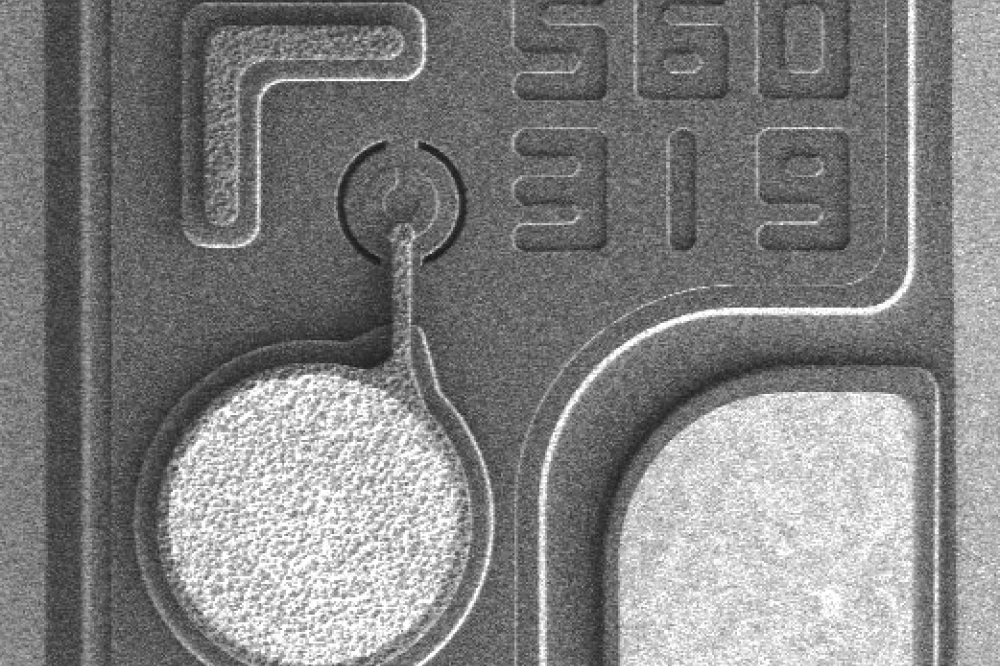
Is the VCSEL the leading candidate for short-reach communication in AI data centres, thanks to its capability to provide incredibly low bit-error rates?
BY RICHARD STEVENSON, EDITOR, CS MAGAZINE
Many start-ups fail to fit the traditional mould. Fledgling firms aren’t just teams of young researchers commercialising trailblazing tech developed during their PhD days. Engineers can have a Eureka moment at any point in their career, and may depart a secure job to pursue a potentially lucrative dream.
But even within the diverse spread of stories surrounding the start-up, the tale behind PicoJool is an outlier.
The key person behind this venture, which produces a portfolio of products based on 200G technology for short-reach optical connections, is its founder, VCSEL veteran Al Yuen. But the company would not have never been born, were it not for the persistence of Peter Barrett, co-founder and general partner of venture capitalist Playground Global.

This June, PicoJool introduced its 200G VCSEL products with a bandwidth exceeding 37GHz.
Yuen, a modest engineer who describes himself as an “accidental entrepreneur”, met Barrett when helping Playground Global evaluate the pros and cons of copper and optical-based technologies for short-reach data transfer in tomorrow’s data centres. When Yuen remarked that VCSELs would provide a superior solution to electro-modulated lasers (EMLs) and silicon photonics, Barrett encouraged Yuen to start a company that would do this. Yuen initially declined, content in his consultancy role that followed his time at Lumentum. “But Peter talked me into it,” admits Yuen.
PicoJool, launched almost two years ago and backed by Playground Global in two seed rounds, each worth $6 million, is now on the verge of sampling its first products.
Further ahead, it might face competition from three very big hitters in the VCSEL industry, all with a rich history surrounding this class of laser. One of the pioneers of this device is Honeywell, with its technology transferred to Finisar, II-VI, and now Coherent. Similarly, Picolight became part of JDSU, now Lumentum; while the VCSEL arm of HP Labs, which went to Avago, is now in the hands of Broadcom.
Much of the knowhow from all these companies is now aiding decisions at PicoJool, says Yuen: “We have participants and designers from all three branches.”
It’s also worth noting that as many key patents were filed several decades ago, they have now expired, allowing PicoJool to employ a number of valuable VCSEL technologies. They feature in devices designed by this Palo Alto start-up, and manufactured by foundry partner WIN Semiconductor.
PicoJool also benefits from its focus on one class of laser, for one application. In contrast, the bigger players have massive portfolios of products, and while they are making money from sales of EMLs and silicon photonics during the construction of AI datacentres, there’s not a compelling reason to promote their VCSELs as worthwhile replacements.
But even if they did, Yuen would not be concerned – in fact, on the contrary, he’d be delighted. “I think that would be a very healthy market to have large suppliers, as well as ourselves.”
According to Yuen, another factor that will allow PicoJool to play a significant role in the ecosystem for tomorrow’s data-centres is its location. “So many of the Taiwan ecosystems, Singapore, Thailand, etc., are very open to partner with us, because we have a US presence.”

VCSELs offer the opportunity for parallel data transfer, and can for the heart of optical engines based on 32 and 64 lane co-packaged optics and near-packaged optics.
Optical options
To
make money in the data centre sector, PicoJool will not just compete for
business that might be targeted by other VCSEL makers. The West-coast start-up
will also be going head-to-head with producers of other classes of laser, as
well as those making microLEDs. All these sources are contenders for delivering
data over a few tens of metres.
In this hotly contested battle for sales, what’s the key metric? Some argue it's the energy per bit. But not Yuen: he is adamant that the bit error rate tops the agenda.
For decades, bit error rates have had to be below 10-6, to support data transfer via Ethernet. But Yuen argues that the benchmark has been redefined with hyperscalers – they are the likes of Amazon Web Services and Google Cloud Platform, employing massive clusters of GPUs or CPUs. “The latency, the error, etc., is very critical. The bit error rate is now below 10-10 as a requirement.”
Helping to ensure such a low bit error rate is a high degree of linearity from the source, alongside a flat response. Both play a role in the number of gigabits-per-second for the VCSEL, and its bandwidth.
Yuen says that there are ‘tricks to bump up bandwidth’, but warns that success may come at the expense of a very high relative-intensity noise. “You want a very flat RF response, and when it rolls over, you want it to be very, very gradual.” Optimise this and there’s the possibility to transmit more data within a given bandwidth, using more advanced modulation schemes; or enjoying a lower bit-error-rate, thanks to a higher signal-to-noise ratio.
An attractive option for transferring vast amounts of data is to build arrays of emitters. These sources, either microLEDs or VCSELs, have individual connections to fibres.
“I think more channel count, lower bit-error-rate is the key,” says Yuen. Using multi-fibre push-on connectors, PicoJool’s 4 by 16 pixel array can operate at 6.4 terabit, using 100G per channel.
Working with WIN
PicoJool’s
partnership with WIN Semiconductor might surprise some, as the Taiwanese III-V
foundry is best known for its production of GaAs-based transistors for handset
PAs. But WIN has been involved in the production of VCSELs for many years. Back
in 2016, when Yuen worked at JDSU, his team transferred its VCSEL technology to
this foundry. He is clearly impressed by the results on the foundry’s 150 mm
line, describing WIN’s process as state-of-the-art.
Working with WIN, PicoJool will drop-ship to its customers. Following 100 percent wafer-level testing, customers will receive bare chips, dispatched on either gel packs or blue tape rings.
To aid device development, PicoJool determines the bandwidth of it VCSELs in-house, using wafer-level testing. More tools are on order, but lead times are lengthy.
Further insight comes from partners. PicoJool is not producing its own ICs, laser drivers, or digital signal processors, but when its VCSELs are evaluated by customers in transceiver development, feedback is provided.
Earlier this summer, PicoJool unveiled its first three products, based on 200G technology. These VCSELs will be sampled in the final quarter of this year. One chip offers 50G non-return-to-zero transmission over 32 channels; another operates at 100G, and has 16 channels; and the third has 8 channels, each delivering data at 200G.
In PicoJool’s case, all forms of VCSEL product emit at 980 nm. Lasing at this wavelength, rather than 850 nm – that’s the conventional wavelength for datacoms – ensures a higher reliability. This is a much-valued attribute, given that these devices will operate at elevated temperatures.

Thanks to the capability to provide parallel data transfer, data transfer in the terabit range is realised.
Yuen says that there are plans to expand PicoJool’s portfolio to include products that incorporate VCSELs into active optical cables and transceivers.
“That's another bar to clear with respect to a smaller company, but again, we'll be partnering with very large contract manufacturers to be shipping those”.
The PicoJool founder is confident that the company’s design experience and credibility will meet the requirements of hyperscalers, which could deploy these products. And if there is significant success, the company’s headcount is sure to rocket well beyond the ten or so employees working there today.