
Infineon and Skeleton to collaborate on AI power
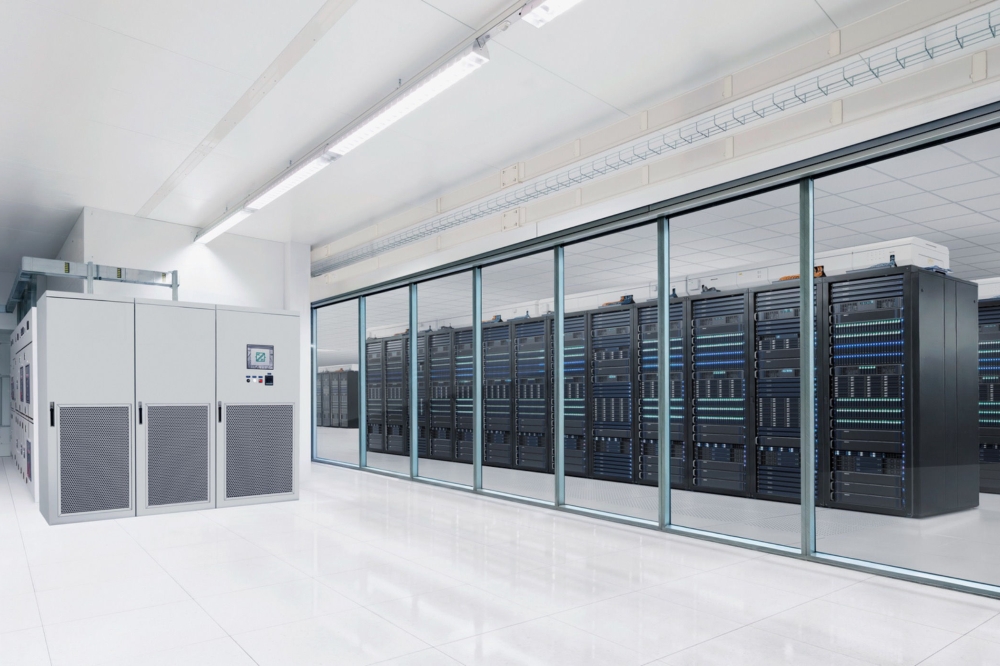
The semiconductor company Infineon and Skeleton Technologies, a maker of energy storage systems for AI data centres, have agreed to jointly develop new architectures for the entire AI data centre power chain that delivers electricity from grid to core. This includes next-generation solid-state transformers (SSTs) for medium-voltage AC to high-voltage DC conversion.
The companies intend to combine Infineon’s high-efficiency high-voltage CoolSiC power semiconductors with Skeleton’s expertise in power conversion systems and supercapacitor technology. The companies are also collaborating on GaN-based peak-shaving systems that combine Skeleton’s supercapacitor technology with Infineon’s CoolGaN power semiconductors.
"AI is fundamentally transforming power infrastructure requirements. The increasing power density of modern data centres calls for new approaches to energy conversion, distribution and storage," said Andreas Weisl, executive VP and chief sales officer of Industrial and Infrastructure at Infineon. "By combining Infineon’s expertise in power semiconductors with Skeleton’s innovation in supercapacitor technology and power conversion systems, we are driving the development of highly efficient and resilient power architectures that meet the demands of next-generation AI workloads."
"Power density is becoming one of the defining constraints of AI infrastructure globally," said Taavi Madiberk, CEO at Skeleton Technologies. "AI data centres need to deliver dramatically more power to increasingly dense GPU infrastructure, without allowing the power system itself to consume more space. Infineon and Skeleton Technologies are both working at the forefront of that challenge. By combining Infineon’s precision in converting and controlling power with Skeleton’s expertise in storing and delivering very high power at speed, we can increase power density across the AI power infrastructure and enable more compute within the same physical footprint."