Trumpf VCSEL solutions for oxygen sensing
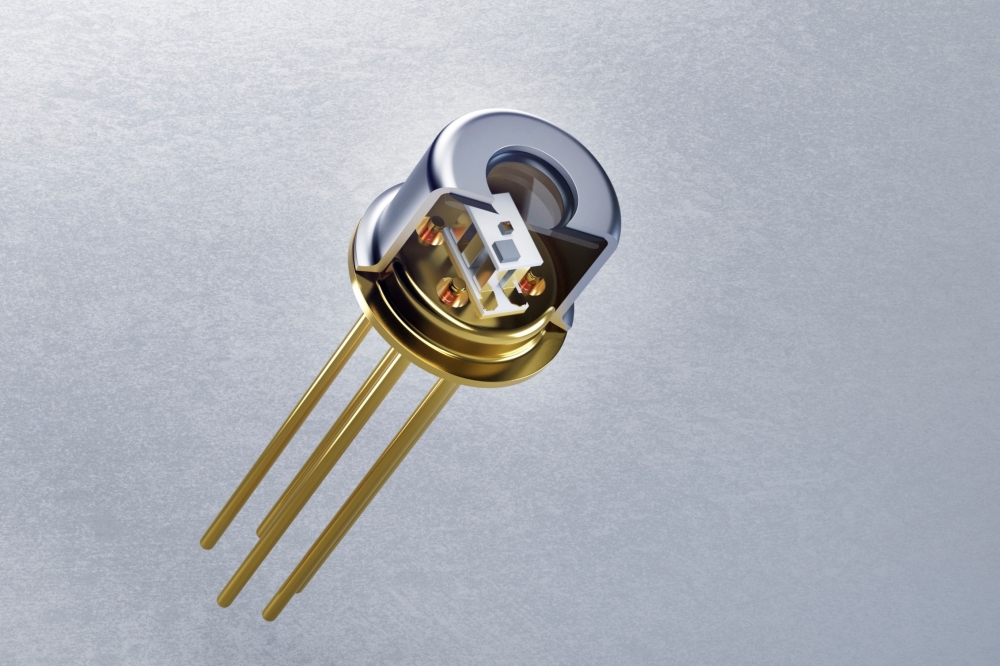
Next generation, rugged industrial VCSELs have wavelengths of 760 nm and 763 nm with improved performance
Trumpf Photonic Components is introducing its next generation of VCSEL for spectroscopic oxygen sensing. Spectroscopic sensing solutions can be claimed as the highest performing sensing technique to monitor relevant parameters such as oxygen concentration.
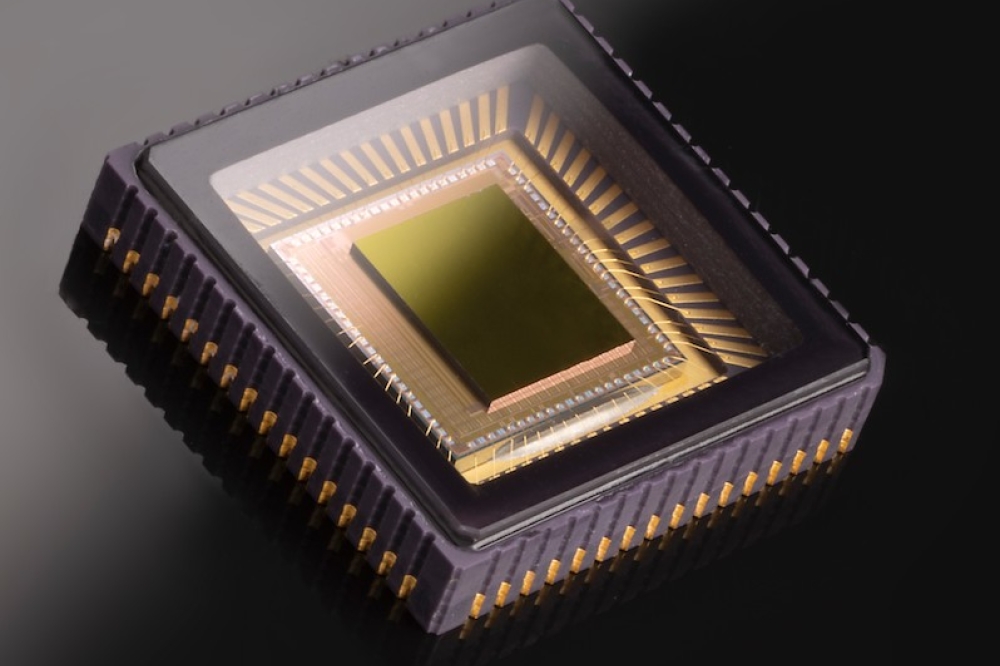
The new generation of 760 nm and 763 nm VCSEL in TO packages are also said to increase reliability. The benefit of offering solutions at wavelengths of 760 nm and 763 nm is that there are no influences from background gases, as no gas other than oxygen shows high absorption at these emission wavelengths.
“We provide integrated, smart VCSEL solutions for easy integration of the components into demanding production systems. Trumpf not only contributes its laser-source know-how, but also combines it with application, optics and assembly know-how”, says Ralph Gudde, VP marketing and sales at Trumpf Photonic Components.
O2 sensing from the petroleum to the medical industry
The new 760 nm and 763 nm VCSEL solutions serve various industrial applications to detect oxygen concentration. “O2 sensing solutions are not only used in demanding industrial environments, but also in automotive or medical settings. Our VCSEL solutions with active temperature and polarisation control therefore offer a large detection range with high resolution and an accuracy of almost 100 percent”, explains Gudde. In power plants or the petroleum industry, for example, the VCSELs support exhaust gas analysis.
If, on the other hand, thinking of the packaging industry, VCSELs support the determination of oxygen in sealed packages such as water bottles. The application fields extend to the medical sector, where the O2 sensors are used in medical devices such as respirators, ventilators or incubators.
The well-established technique to serve these applications is “tunable diode laser absorption spectroscopy” (TDLAS). TDLAS and single-mode VCSELs are said be a perfect match. The VCSELs offer high accuracy and controllability with their absolute symmetrical beam shape, narrow line width and distinct polarisation.
Therefore, the VCSEL solutions enable TDLAS to be a high-performance sensing technique that offers high measurement speed with in-situ measurement in less than a second. Non-contact laser measurement covers a wide temperature range and allows determination of process pressure and temperature at the same time.
This is made possible by the low thermal wavelength coefficient of the VCSEL material and the integrated thermoelectric cooler (TEC). The small size of the VCSEL combined with its increasing functionality make it the perfect solution to address the demand for hardware miniaturisation.
Made for any environmental conditions
Integrated sensor solutions in a TO housing not only reduce system complexity and enable high-end sensing solutions with cost advantages. The hermetically sealed, rugged housing also minimises the risk of damage that can be caused by external factors in demanding ambient conditions. Additionally, there is hardly any thermal sensitivity of the sensor as the packages are be equipped with integrated temperature control with TEC and thermistor. Applications demanding a large temperature window can be performed as the user can regulate the laser temperature precisely in order to control the wavelength.