
First ferroelectric AlScN films grown using PEALD
Kurt J. Lesker Company (KJLC), a vacuum technology and thin film deposition company, has announced its contribution to the first demonstration of ferroelectric AlScN thin films grown using plasma-enhanced atomic layer deposition (PEALD) under ultra high purity conditions (UHP-C).
The research, published in Nature Communications Engineering, was conducted with scientists from the US Army Research Laboratory, Massachusetts Institute of Technology (MIT), and Penn State University.
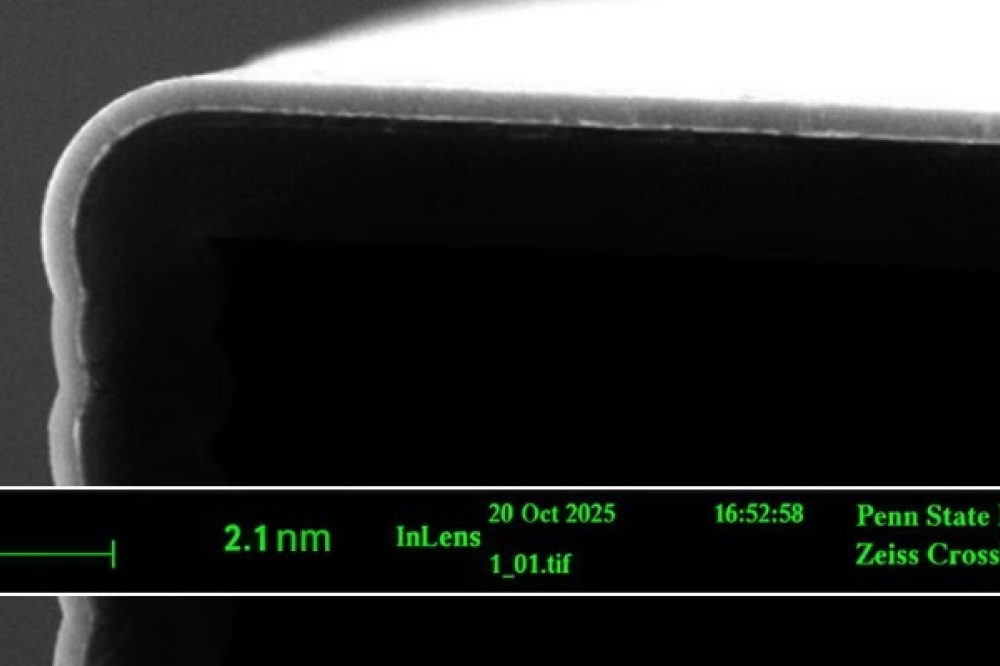
According to KJLC, the paper represents a significant milestone for advanced materials engineering, demonstrating that PEALD-grown AlScN can exhibit ferroelectric switching behaviour while maintaining the conformality and atomic-level thickness control required for increasingly complex semiconductor device architectures.
As the semiconductor industry advances toward smaller feature sizes and more sophisticated 3D device structures, material purity has become a critical factor in enabling next-generation technologies.
AlScN has emerged as a promising material due to its unique combination of piezoelectric and ferroelectric properties, making it a strong candidate for applications including nonvolatile memory, RF filters and resonators, piezoMEMS devices, and advanced sensing technologies.
The breakthrough builds on KJLC's ongoing work in developing ultrahigh purity deposition environments. Previous research demonstrated that contaminants such as oxygen and carbon can significantly degrade the electrical performance of AlScN thin films by increasing leakage currents and reducing ferroelectric performance.
By implementing UHP-C technology which combines advanced vacuum system design, high-purity precursor delivery, and plasma-enhanced ALD processes, researchers were able to minimise contamination levels and enable the growth of high-quality AlScN films with functional ferroelectric properties.
At the core of the research is a PEALD super cycle process that alternates between AlN and ScN growth sequences, providing precise atomic-scale control over film composition and structure.
The approach enables highly ordered crystalline growth while preserving the conformal coating advantages that make ALD attractive for advanced semiconductor manufacturing. Most importantly, the resulting films demonstrated definitive ferroelectric switching behaviour, a key requirement for future electronic and memory applications.
The research also highlights the potential for ALD-based deposition techniques to enable new generations of ferroelectric materials in complex 3D structures and high-aspect-ratio features, opening opportunities for more capable manufacturing approaches in advanced electronics.