
Photon Design to show simulator at PCSEL 2025
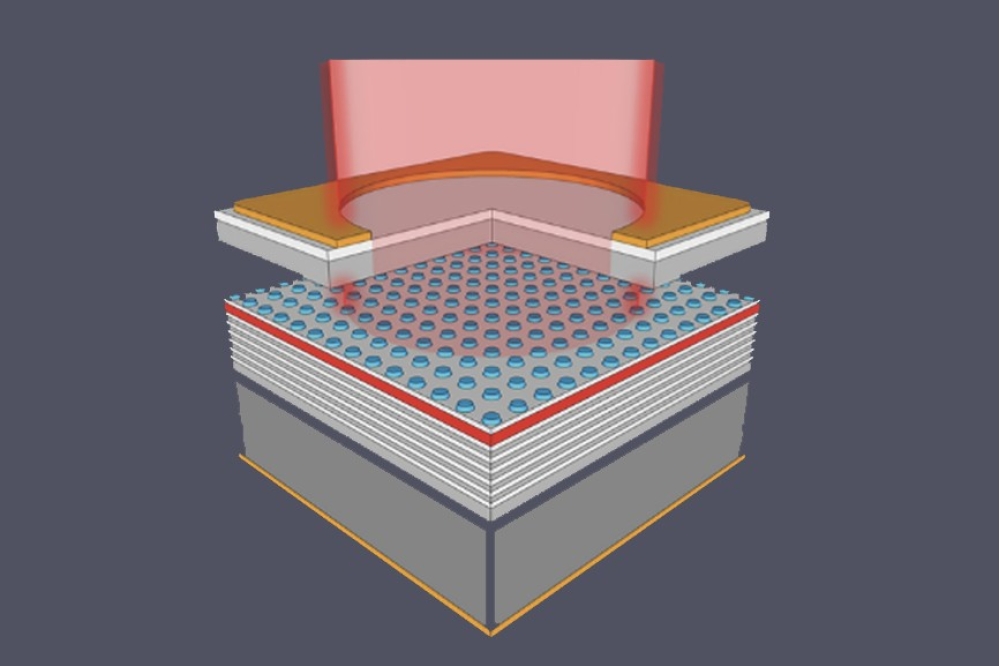
Photon Design, a developer of photonic simulation CAD software, will take its PCSEL simulation solution to PCSEL 2025, the International Workshop on PCSELs, held at the University of Glasgow, 10–12 November 2025.
Dominic Gallagher, CEO of Photon Design, said: “PCSELs are challenging to model, due to their complex crystal structures, however, using both our HAROLD and OmniSim simulation tools makes it possible. HAROLD simulates the gain spectra in the PCSELs epitaxy structure, while OmniSim, an FDTD-based, dynamic gain modeller, simulates how pulsed laser light propagates through the laser over time.
"OmniSim’s Q-factor calculator can determine operating wavelength and linewidth results 85 percent faster than conventional simulators, with equivalent accuracy. It also generates band diagrams for photonic crystal structures, which can then be optimised using our Kallistos simulator.”
The 2025 workshop features lectures and invited talks from PCSEL (photonic crystal surface emitting lasers) experts, covering key topics such as high-power, InP-based PCSELs, GaN implementations and photonic-crystal integration. PCSEL 2025 provides a platform for presenting research findings and discussing developments in PCSEL (photonic crystal surface emitting lasers) device design, engineering and manufacturing technologies.
The conference will also address emerging opportunities for this rapidly advancing, new laser type, which is particularly well-suited to high-coherent power applications in datacoms, telecoms, sensing, and material processing markets.
This year, the workshop is held in conjunction with the International Symposium on Photonic and Electromagnetic Crystal Structures (PECS) XIV. The keynote address will be delivered by Susumu Noda of Kyoto University, with academic speakers from Aston, Illinois, Peking and Kyoto universities and industrial representatives from Sumitomo Electric, Hamamatsu Photonics, Stanley Electric and Huawei UK.