
Fraunhofer ISE to inkjet print space solar cells
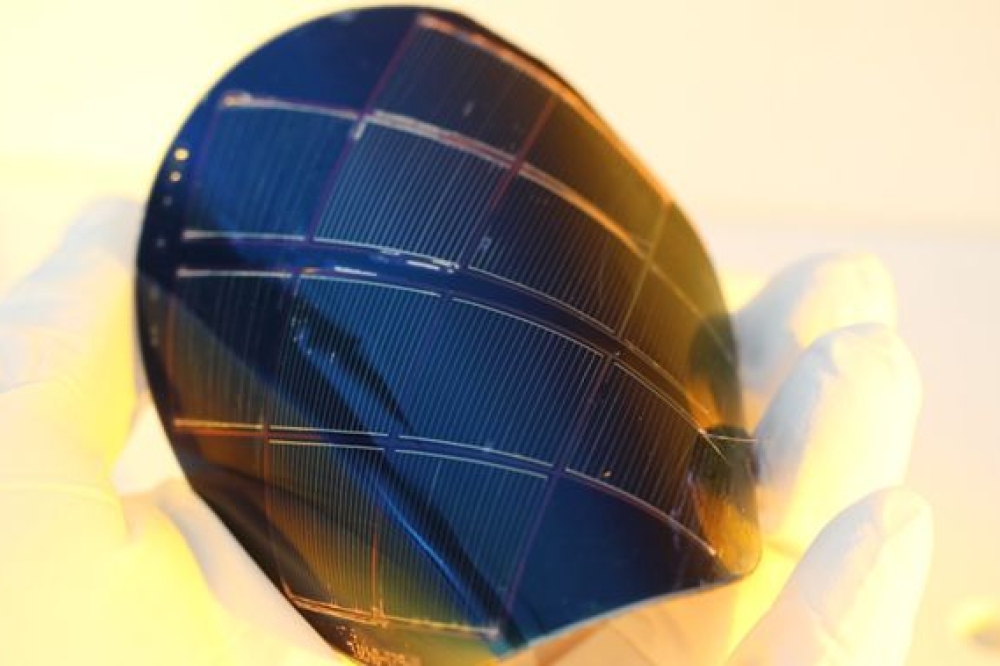
A team from Fraunhofer ISE is developing an innovative mask-and-plate approach to microfabricate III-V space solar cells without the use of photolithography or metal evaporation. The project is supported by the European Space Agency (ESA) through its Discovery & Preparation element.
AlternateSpace, the solution developed by the team, addresses sustainability concerns by replacing photolithography with inkjet printing technology, a technique that is well-established in the graphics and TV screen manufacturing industries.
The use of hotmelt inks in this process offers several advantages: the technique does not rely on toxic or photoactive materials, it can be applied directly in a precisely controlled pattern and it eliminates wet-chemical development steps, significantly simplifying the process chain and reducing chemical waste.
For metal contact deposition, this approach also replaces metal evaporation with electroplating. This allows metal to be deposited only on areas where the semiconductor material is not covered by ink with no subsequent lift-off steps required.
This alternative solution required extensive optimisation, including testing various inks and adjusting parameters, such as resolution and temperature, to achieve reliable small contact openings. The mask’s chemical compatibility was verified by testing the hotmelt ink across different electrolytes, temperatures and pH values.
The subsequent metallisation involved the evaluation of different metal stacks for electroplating and explored nickel-phosphorus plating as a non-ferromagnetic alternative to standard nickel. A final sample featuring silver front side contacts on nickel-phosphorus emerged as a space-compatible option.
After a fully defined process route that incorporates all the newly developed steps, a fully functional photolithography-free solar cell based on space-compatible electroplated metal contacts is expected in December.
"This work marks a key step toward cost-effective, sustainable and efficient III-V solar cell technology. It paves the way for a scalable and economically viable manufacturing route for next-generation III-V space photovoltaics. The results of the activity highlight the key role of ESA's Discovery & Preparation programme in generating novel ideas that can drive the development of future space technologies", commented Erminio Greco, solar generators engineer at the European Space Agency.
"By replacing photolithography and metal evaporation with scalable inkjet printing and electroplating, Fraunhofer ISE demonstrates a simplified process with significantly reduced chemical waste. This approach aligns with the goals of green space sustainability and cost reduction. After the successful demonstration of this approach, we aim towards a collaboration with industry to further develop, stabilise and finally scale the process towards industrial realisation", commented Oliver Höhn, head of the III-V semiconductor technology group at Fraunhofer ISE.