
ALMA telescope benefits from 145 InGaAs LNAs
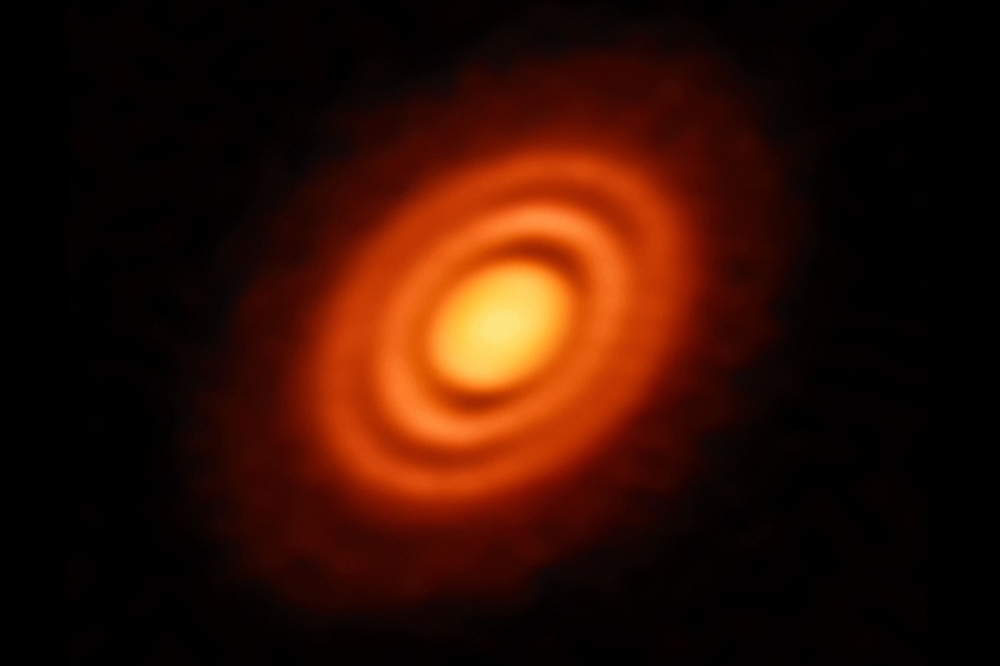
Fraunhofer IAF and the Max Planck Institute for Radio Astronomy have provided 145 high-performance low-noise amplifiers for the ALMA radio telescope array in Chile’s Atacama Desert.
The amplifiers are based on InGaAs mHEMT MMICs and are essential components of the high-frequency receivers for the wavelength range between 2.6 and 4.5 mm (frequency range: 67–116 GHz, known as Band 2).
They will enable ALMA to perform more precise measurements of objects and galaxies in the universe in order to gain new information about the formation of stars, planets and life. The amplifiers delivered complete ALMA, which began scientific operations in 2011 and has been gradually expanded since then.
The Atacama Large millimetre/submillimetre Array (ALMA) in the Chilean Andes is one of the most powerful radio telescope facilities in the world. Researchers use it to study dark and distant regions of the universe in order to better understand how stars, planets, galaxies and life itself are formed. To do this, ALMA measures the millimetre and submillimetre radiation emitted by cold molecular clouds, for example. Molecular clouds are interstellar gas clouds with a temperature of only a few tens of Kelvin, in which stars form when the density and temperature are right.
ALMA has a total of 66 individual parabolic antennas with diameters of 12 m or 7 m, each equipped with high-frequency receivers for ten wavelength ranges (›ALMA bands‹) between 6 and 8.6 mm (35–50 GHz) and 0.3 and 0.4 mm (787–950 GHz) in the electromagnetic spectrum. For Band 2, which covers wavelengths from 2.6 to 4.5 mm (67–116 GHz), the Fraunhofer Institute for Applied Solid State Physics IAF and the Max Planck Institute for Radio Astronomy (MPIfR) have now provided 145 low-noise amplifiers (LNAs). This means that all ALMA bands are now fully equipped for the first time.
With ALMA’s Band 2, researchers hope to gain a better understanding of the so-called cold interstellar medium — a mixture of dust, gas, radiation and magnetic fields from which stars are formed. Complex organic molecules in nearby galaxies, which are considered precursors to biological building blocks, as well as planet-forming disks, will also be studied in greater detail thanks to the improved measurement capabilities.
“The performance of receivers depends largely on the performance of the first high-frequency amplifiers installed in them,” explains Dr. Fabian Thome, head of the subproject at Fraunhofer IAF. “Our technology is characterized by an average noise temperature of 22 K, which is unmatched worldwide.” With the new LNAs, signals can be amplified more than 300-fold in the first step. “This enables the ALMA receivers to measure millimetre and submillimetre radiation from the depths of the universe much more precisely and obtain better data. We are incredibly proud that our LNA technology is helping us to better understand the origins of stars and entire galaxies.”
“This is a wonderful recognition of our fantastic collaboration with Fraunhofer IAF, which shows that our amplifiers are not only ‘made in Germany’ but also the best in the world,” says Michael Kramer, executive director at MPIfR.
Fraunhofer IAF and MPIfR were jointly commissioned by the European Southern Observatory (ESO), which operates ALMA in cooperation with other international institutions. Fraunhofer IAF was responsible for the specific design of the MMICs, their manufacturing, their testing at room temperature and the selection of the chips. MPIfR took over the modules’ complex assembly and qualification, including cryogenic test measurements at 15 K for use in the ALMA Band 2 receivers matching ESO specifications.
ALMA is jointly operated by ESO, the US National Science Foundation (NSF) and the Japanese National Institutes of Natural Sciences (NINS) in cooperation with the Republic of Chile.
ALMA is supported by ESO on behalf of its member countries (Belgium, Denmark, Germany, Finland, France, Great Britain, Ireland, Italy, the Netherlands, Austria, Poland, Portugal, Spain, Sweden, Switzerland, the Czech Republic, and the host country Chile), by the NSF in collaboration with the Canadian National Research Council (NRC), the Taiwanese National Science Council (NSC) and NINS in cooperation with the Academia Sinica (AS) in Taiwan and the Korea Astronomy and Space Science Institute (KASI).