
QD concentration raises radioluminescence efficiency
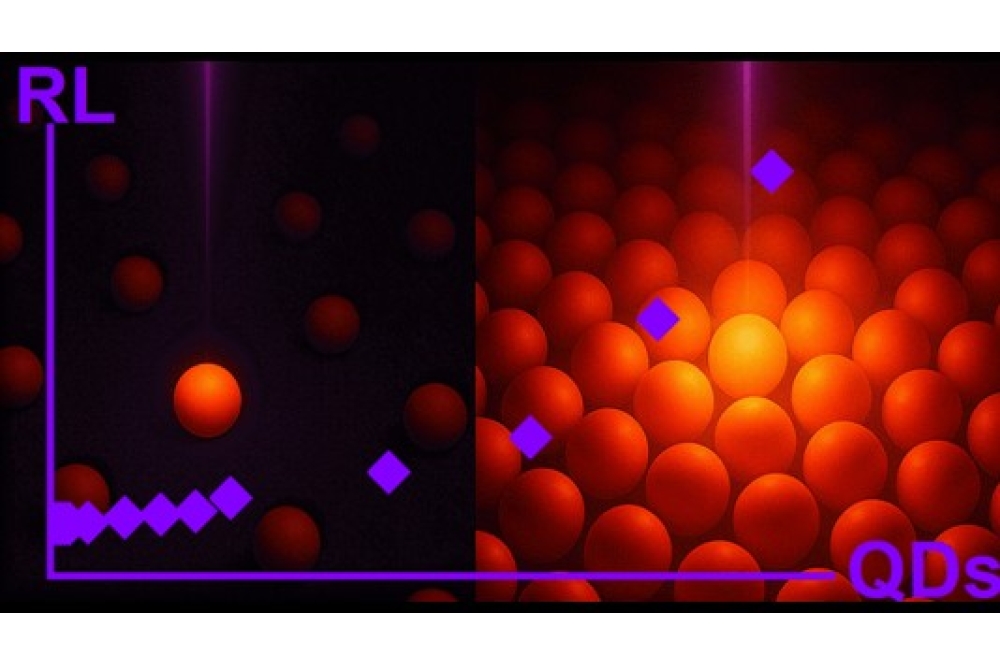
In a study published in Nano Letters, researchers at the US Argonne National Lab demonstrated a quadratic increase in radioluminescence (RL) efficiency with quantum dot concentration for applications in nanoparticle-based scintillators in radiation detection and imaging technologies.
The researchers' experiments using CdSe/CdS QDs in a polymer revealed a superlinear increase in radioluminescence with the QD concentration despite optical losses from inner filtering and interparticle interactions. When corrected for inner filtering, RL shows a quadratic concentration dependence, consistent with simple analytical models of improving the secondary electron capture.
Practically, the benefits of high QD concentrations are muted by optical losses, according to researchers, but they think that the findings will apply to other systems with insulating hosts.
In the article abstract they write: "In addition to manipulating emission for large effective Stokes shifts, future improvements may come from hosts with higher stopping power and better charge transport, which enable more effective funneling of excitations but without concomitant optical losses associated with high nanoparticle concentrations."
Pictured above: Dilute composites (left) with well-separated QD scintillators are less efficient at capturing secondary electrons generated by X-ray beams than dense composites (right).
Reference
Benjamin T. Diroll et al; Nano Letters Vol 25/Issue 47 (2025)