Compounds net $7.2m for high-risk projects
High-risk projects involving SiC power modules for automobiles, high-brightness LEDs for solid-state lighting and AlN substrates have won $7 million backing from the US Commerce Department.
The Department s Advanced Technology Program (ATP), which is managed by the National Institute of Standards and Technology (NIST) in Boulder, CO, funded 32 new projects in the latest round of awards.
The three-year projects all involve high-risk efforts that a single company would be unlikely to take on without backing from the state. However, the potential benefits of any successful projects on the US economy could be huge.
Three of the newly-funded projects involve compound semiconductor technologies. The biggest of these projects is focused on white LED lamps for solid-state lighting. It involves chipmaker Cree and nanomaterials specialist Nanocrystal Lighting.
With ATP backing of $3.4 million, the total fund for this project amounts to almost $7 million. The aim is to demonstrate an LED-based lamp with an integrated chip approach that "would more than quadruple the brightness and double the efficiency of existing LED systems".
If successful, such a development could reduce the cost per lumen of LED lamps to a point where their introduction for general solid-state lighting could be accelerated by three years.
Cree and Nanocrystal plan to combine high-efficiency blue LEDs with phosphor nanomaterials that convert the emission into broadband white light.
Meanwhile, an intriguing project that could drastically reduce reliance on gasoline in automobiles has been sponsored by Mississippi State University spin-out and SiC chip specialist SemiSouth Laboratories.
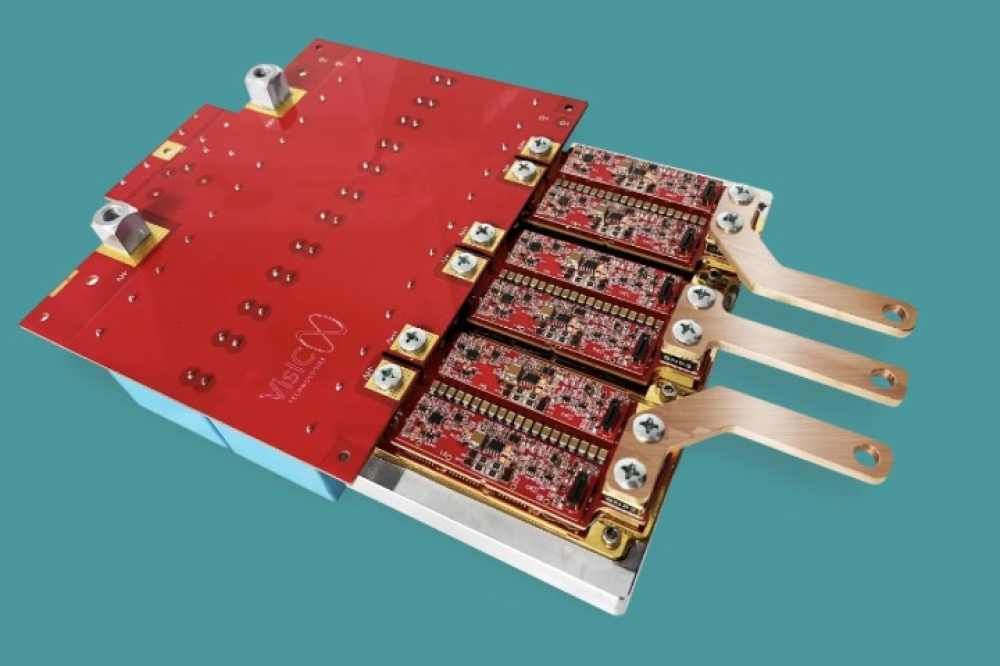
With ATP funding of $1.8 million, SemiSouth plans to develop an integrated SiC "smart power chip" that promises to halve the volume and weight of hybrid electric vehicles power modules.
SemiSouth has lined up car maker Nissan, as well as General Electric and Lockheed Martin, as potential partners in the project. Nevertheless, a prototype module is expected to take 5-7 years to produce.
The third project, which has received $2 million from the ATP, involves the development of AlN native substrates by Crystal IS of Watervliet, NY. Armed with the extra cash, the company plans to accelerate the development of 2-inch diameter boules for both electronic and optoelectronic applications.