
Another surge for SiC
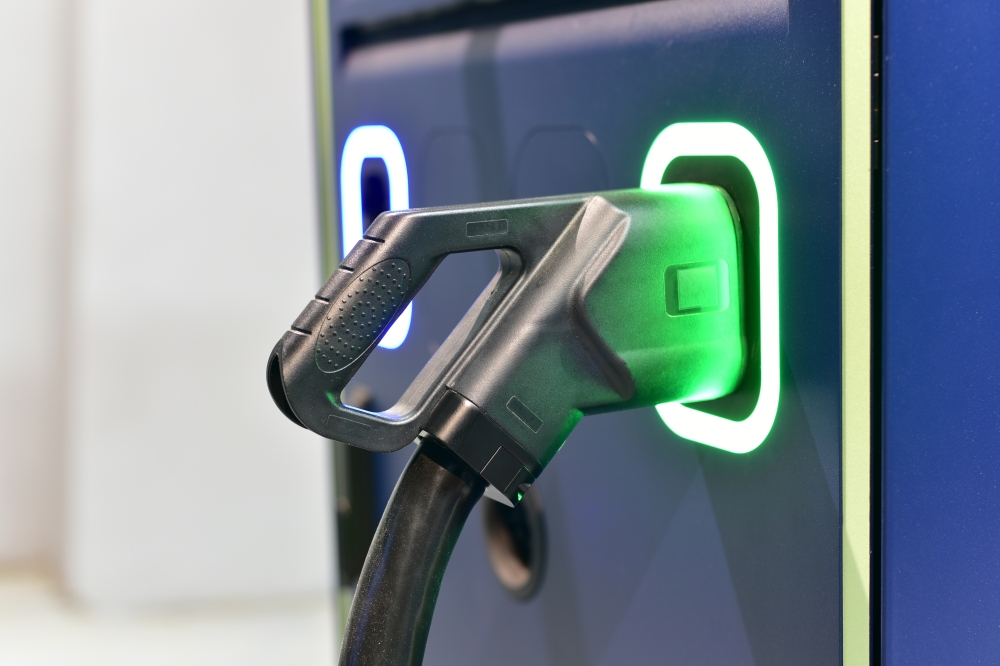
Very fast charges for EVs, alongside power infrastructure for data centres, will provide the next big opportunities for SiC.
BY RICHARD STEVENSON, EDITOR, CS MAGAZINE
At this year’s CS International, onsemi’s Senior Director of Technical Marketing, Mrinal Das, gave a wonderfully succinct synopsis of the next big opportunities for SiC. He described the next frontier as sustainably scaling the megawatt mountain.
“Driving a lot of this change is improving our quality of life through being more productive,” argued Das, who expanded on this point by saying that SiC power electronics has a crucial role to play in trimming the time it takes to charge an EV, and helping to advance AI data-centres through better power supply.
According to Das, the EV industry is transitioning to very high-power charging. “1-megawatt charging is here today. The goal is to make the experience very similar to fuelling up at the gas tank or the petrol station.”
Also evolving is AI, which is no longer a tool for just carrying out relatively simple tasks. “At the other end of the spectrum you have agentic AI, which is AI that has become so advanced that you can give it a goal-oriented task.”
These jobs for AI, undertaken with some level of reasoning and inference, require sophisticated, highly capable processor units with megawatt levels of power.

Manuel Gärtner, Director Wide Band Gap & Electrification at
STMicrolectronics, championed the benefits of extensive vertical
integration, from powders to packaged devices.
For applications with these power requirements, even incremental increases in efficiency are highly valued. Das said that switching from silicon to SiC easily delivers a 1 percent gain in efficiency, an energy saving that could be big enough in 2030 to power 40 million homes in the US. Note that in the EV industry, SiC has enabled efficiency increases of around 3 percent – that’s a game-changing improvement.
Another trend that Das is seeing is a move to higher voltages within the data centre. They have already increased from 400 V to 800V, and he is expecting a further rise to 1500 V by the end of this decade.
Much lower voltages are also used in the data centres, and Das expects SiC to only serve at the upper end. “The silicon MOSFET is still a very, very good technology on the GPU or consumption end.”
Smart grids, operating more efficiently than today’s infrastructure, are also expected to feature SiC.
In inverters in EVs, the application behind the recent hike in sales, SiC is still widely used. “The growth is still there,” said Das, who added: “Expectations were previously very, very high.”
Infineon’s insights
Providing anther perspective on market dynamics, Peter Friedrichs, Fellow of SiC at Infineon Technologies, reminded delegates that there have already been three occasions when SiC has enjoyed growth resembling the shape of a hockey stick. He pointed out that sales took off in the early 2000s, thanks to deployment of SiC in power supplies; during the previous decade, a second rapidly growing market for these devices came from supporting renewable power generation; and more recently, the introduction of EVs has accounted for a third ramp in revenue.
“Right now, we see a new opportunity. It's all about power infrastructure,” remarked Friedrichs, who explained that SiC could serve in circuit breakers and solid-state transformers.
He said that the EV revolution is not limited to cars. It extends to trucks, requiring charging powers of several megawatts. Due to this, charging stations must operate at up to 30 MW, a power that cannot be met with existing platforms involving classical substations. There must be a move to a high-voltage DC bus, alongside the replacement of traditional, copper-based transformers with solid-state variants. “Since this is all about fast switching at high voltages, it's a clear playground for silicon carbide semiconductors.”
Friedrichs referred to AI power servers as the other “big fish” in the game. He claimed that this application has power needs similar to those for charging infrastructure – and here he expects line frequency transformers and AC power supplies will be replaced by a high-voltage DC bus, initially served with line frequency transformers, but in time, solid-state transformers.
These changes represent a shift towards a DC grid, where solid-state circuit breakers will have a role to play.
“The market outlook for the circuit breakers based on solid-state materials is really substantial,” estimated Friedrichs. He explained that even a small share of the total market – estimated to be worth over $6 billion, and increasing at a compound annual growth rate of 3 percent through the remainder of this decade – will lead to significant revenue. By 2023, sales of solid-state circuit breakers could net more than $800 million, according to Infineon’s predictions.
One of the merits of the solid-state circuit breaker is its speed. “You can isolate a fault much faster than in a mechanical-driven system,” said Friedrichs. What’s more, there’s far greater sophistication, with the opportunity for failure recovery and safe diagnostics, as well as the avoidance of wear-out mechanisms – mechanical circuit breakers suffer from arcing.
Friedrich championed the SiC JFET for circuit breakers, as this class of transistor can handle a higher power density than the SiC MOSFET. He pointed out that another asset of the JFET is its superior stability, especially at high voltages and currents, that ensures linear-mode operation.

Networking plays an important role in CS International, which this year
took place at the Sheraton Brussels Airport Hotel on 21-22 April.
Where high-voltage SiC MOSFETs have a big role to play, according to Friedrichs, is in transformers converting 10-35 kV, AC, into a DC supply of more than 800 V for the IT racks in data centres. Here, the high-voltage reduces system complexity. For a 34.5 kV AC supply from the grid, if 1.2 kV devices are used, there needs to be around 40 sub-systems per phase. This figure falls to about 20 and 15 sub-systems per phase when using 2.3 kV and 3.3 kV MOSFETs, respectively.
ST: Valuing vertical integration
Along with onsemi and Infineon, another big hitter in the SiC market that will target emerging megawatt applications is STMicroelectronics. To increase its competitiveness, it’s expanding its capacity.
Details surrounding this growth in capacity were discussed by Manuel Gärtner, Director Wide Band Gap & Electrification.
To put this expansion in context, Gärtner outlined the company’s key milestones, now dating back three decades, that began with a collaboration with Catania University in 1996. By 2004 and 2009 ST had demonstrated its first SiC Schottky diode and power MOSFET, respectively, with production following in 2007 and 2014, respectively. Also featuring in the company’s history are Tesla’s adoption of its products, its acquisition of the SiC substrate maker Nortsel in 2019, and the creation of the world’s first fully integrated SiC facility in 2024.
Gärtner emphasised the increasing extent of vertical integration at ST. “We get the raw material. We get silicon powder, carbon powder, a lot of energy, and we produce ingots. We go on to do devices, and also packaging.”
He argued that this approach has a number of benefits: it reduces reliance on suppliers, improves process control and efficiency, and lowers transport costs.
One issue facing many companies is trade restrictions. Helping to address this, ST has two big fabs – one in Europe, and another in China, in a joint venture with Sanan. “It's very important that we can serve the China market, which is booming for e-mobility, with the same technologies,” remarked Gärtner.
The two facilities, in Chongqing and Catania, will start production this year, with full build-out slated for 2028 and 2033, respectively. “We need a little bit longer in Catania, because we add the packaging and modules,” said Gärtner, who explained that these fabs will feature many robots.
This will help boost yield, streamline manufacture, and ultimately aid the deployment of SiC power electronics in EVs, as well as megawatt charges and power infrastructure for tomorrow’s datacentres.