
Finnish team reports results of '6G Visible' research project
The University of Oulu and the Finnish Meteorological Institute has reported results from the '6G Visible' research project in which they developed solutions that combine 6G technology, AI and distributed computing into services to support autonomous traffic in future 6G networks.
The project team evaluated the performance of vehicle sensor systems, such as LiDAR, cameras and radars, in challenging weather conditions. It also developed models to analyse the impact of weather factors on intelligent transport challenges, such as traffic safety and sustainability. The team also looked at new services, such as nowcasting-based short-term weather forecasts for real-time use. Finally, they implemented test platforms, such as the smart mobility test track in Sodankylä and autonomous scale models.
The research focused particularly on weather services, software and system architectures, as modern vehicles function as extensive software platforms whose reliability, safety and performance face new requirements due to autonomous driving. The project developed solutions to combine data fromvehicle sensors with external data sources to enhance situational awareness of traffic.
A key outcome of the project was the ability to integrate data from various sources — such as traffic, environmental and weather data — and to develop efficient data transmission and processing solutions to support autonomous driving. This processed data can be used in driver assistance, remote traffic management and fully autonomous vehicle operations.
“During the research, we combined wireless networks, AI, weather data and vehicle sensors into a unified and evolving system that improves situational awareness in autonomous mobility,” said Tero Päivärinta from the University of Oulu.
“The Finnish Meteorological Institute contributed weather and safety perspectives to the project. The research developed road weather services and short-term forecasts tailored for autonomous vehicles, based on weather radar data, for example. Weather and road conditions were integrated into decision-making, such as routing and safety anticipation,” adds senior research scientist Timo Sukuvaara from the FMI Finnish Meteorological Institute.
The project addressed the challenges of the 6G era, such as managing highly distributed and complex systems, and integrating different devices and services into a unified solution supporting driving.
As a result, the team say their approach made it possible to expand the “vision” of vehicles significantly: they were able to utilise network-based information about their surroundings and anticipate situations even before they became detectable by their own sensors. This improves the safety of driver assistance, as well as autonomous and remote-controlled driving in changing and challenging conditions.
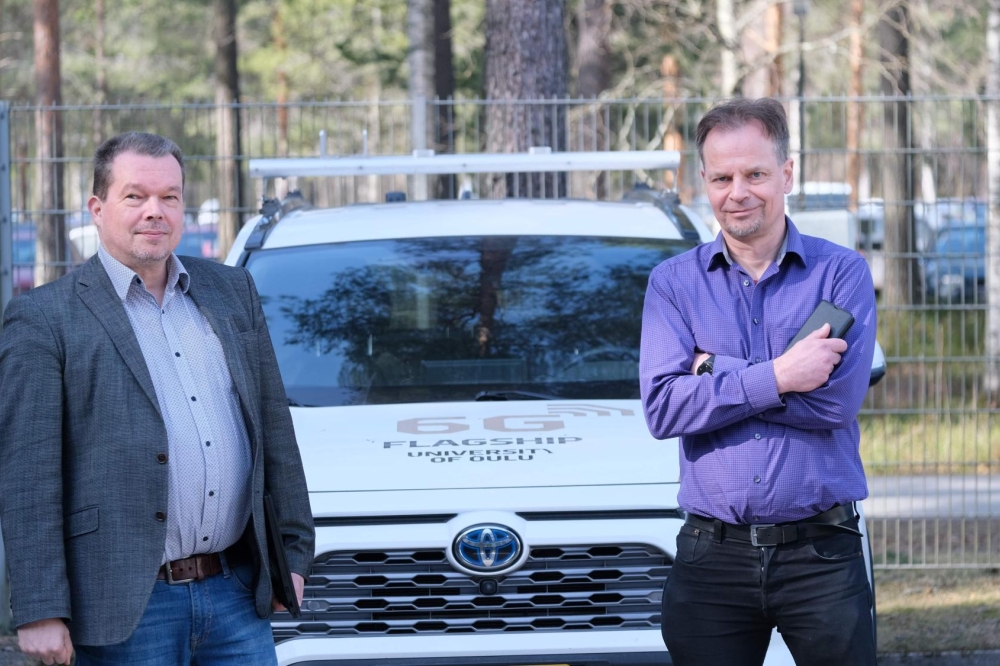
Pictured above: Tero Päivärinta from the University of Oulu and Timo Sukuvaara from the FMI Finnish Meteorological Institute