
Hiden adds dual polarity feature to SIMS family
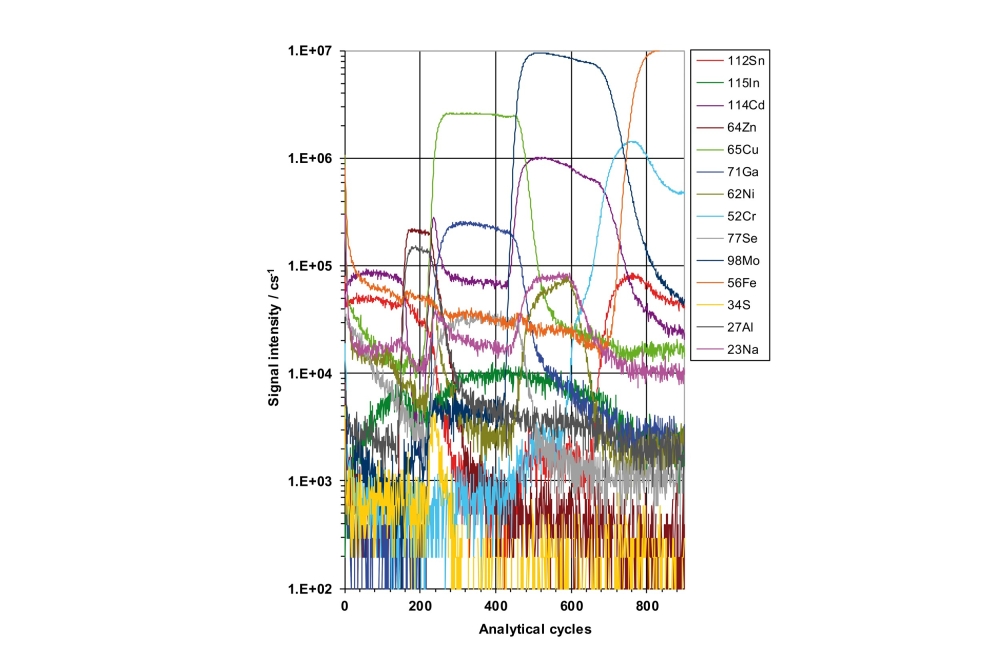
Hiden Analytical, a materials and gas analysis company, has added a Dual Polarity Simultaneous Detector to its SIMS (Secondary Ion Mass Spectrometry) Workstation family of instruments.
Secondary Ion Mass Spectrometry is a surface analysis method using a beam of energetic ions to erode the surface, with almost atomic layer precision. It is highly sensitive and is used in the semiconductor, glass coating and thin layer deposition industries for product development and monitoring, often with sub ppm sensitivity.
In use, the material ejected from the sample by an incident ion beam becomes charged, either positive or negative depending on its chemistry. To make a full analysis two runs normally have to be made, one for each polarity. However, this latest development from Hiden Analytical enables both to be collected in a single measurement, reducing the overall analysis time and improving accuracy.
In highly complex samples, such as CIGS flexible solar cells, the dual polarity method will provide significantly more information, especially in failure analysis samples where a single defect needs to be measurement in both positive and negative ions.
Graham Cooke, principal scientist at Hiden Analytical commented, “this really is a game-changing development for thin film measurement and puts SIMS, and Hiden, at the forefront of cost-effective materials analysis.”
Pictured above: Positive secondary ion depth profile of flexible CIGS solar cell