
Wolfspeed: The 10 kV SiC MOSFET
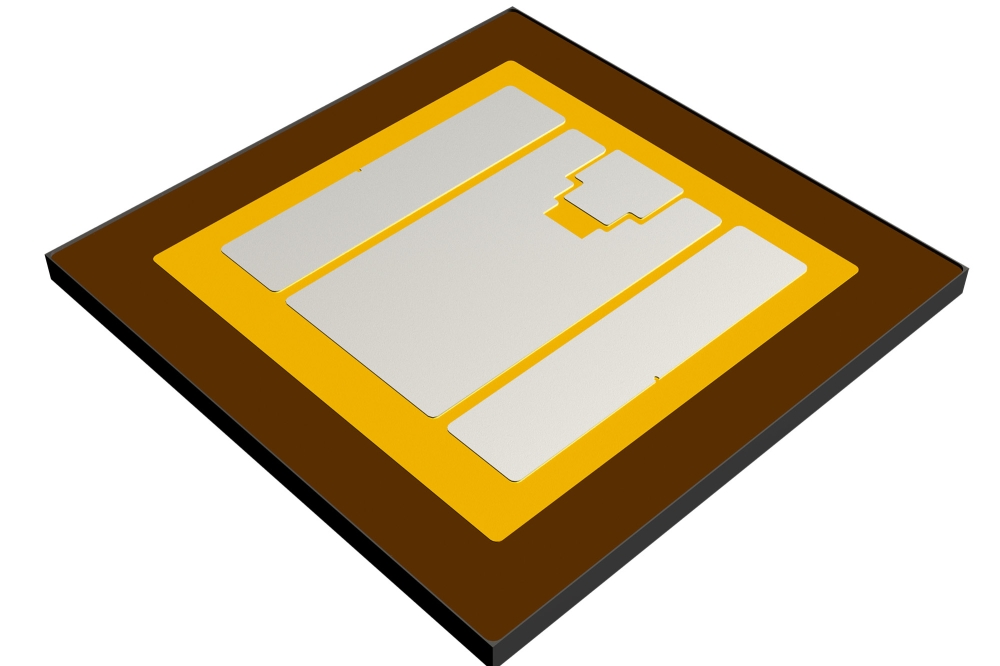
As well as serving in motor drives, electrical infrastructure and uninterruptable power supplies, the10 kV SiC MOSFET could win deployment in mining and fertilizer production.
BY RICHARD STEVENSON, EDITOR, CS MAGAZINE
Since mass-production of the SiC MOSFET commenced in 2010, portfolios have expanded, often through the introduction of products offering higher blocking voltages. This trend continues to this day, with Wolfspeed announcing yet another milestone this March: the world’s first commercial 10 kV MOSFET, shipped in the form of a bare die.
This device, offering an alternative to the incumbent 6.5 kV silicon IGBT, is targeting a number of applications. Some are to be expected, such as electrical infrastructure and motor drives, while others could come as a surprise, such as opportunities in agriculture and the nuclear industry.
One of the primary applications for Wolfspeed’s 10 kV MOSFET is in high-voltage motor drives, such as 4160 AC motor drives. In this particular case, the 10 kV MOSFET is an attractive alternative to SiC siblings operating at lower voltages, such as 3.3 kV; and to silicon IGBTs, which suffer from slower switching speeds, lower efficiencies and inferior thermal characteristics.
When engineers design motor drives with transistors operating at higher voltages, they can simplify circuits by turning to lower-level topologies that employ fewer devices, fewer gate drivers, and a simpler busbar. As well as potential to trim the total bill of materials, this elegant approach improves reliability.
The latter is a big deal, given that the motor drive could be deployed in an off-shore oil rig or up in a turbine.
“How expensive is it when something goes wrong in a place like that?” points out John Perry, Vice President & General Manager for Medium & High Voltage Products and Government Contracts at Wolfspeed. He argues that simply reducing the number of devices is a huge value proposition, thanks to increased reliability.
If silicon IGTs, widely available up to 6.5 kV, are replaced with 10 kV SiC MOSFETs, the benefits go beyond a lower-level topology. There’s the opportunity for far faster switching speeds, which unleashes many merits.
“You can really radically shrink the magnetics, because your IGBT solution is limited to something like 600 Hz, whereas [10 kV SiC MOSFETs] could go to, say, 10 kHz,” argues Perry.
Far faster switching enables a trimming of the size and weight of the drive, a much-valued gain on oil rig platforms, according to Perry: “That's some of the most expensive real estate in the world.”
Further benefits coming from replacing silicon IGBTs with SiC MOSFETs include increased electrical efficiency, which saves energy and simplifies thermal management.
In some systems, Perry says that thermal management can account for half the volume of the motor drive unit, and switching to SiC MOSFETs promises to cut that in half. “That saves a lot of space and weight, really important to our customers.”
Another advantage of the SiC MOSFET over the silicon IGBT is that it can tolerate more heat, enabling an additional trimming of the dimensions of the thermal management solution.
Wolfspeed also sees a significant opportunities for its 10 kV MOSFETs in electrical infrastructure and uninterruptable power supplies.
Perry points out that transformers are bulky, heavy, lossy, and customers experience a really long lead time. “A solid-state version is going to be smaller, lighter, more efficient, and also enable a lot of system flexibility.”
There are also a number of applications that exploit the opportunity to deliver massive, incredibly short bursts of energy with 10 kV MOSFETs.
Interested parties are reaching out to Wolfspeed, looking to use these MOSFETs in mining, for blowing up rocks and drilling into the earth; and to generate plasmas, for nuclear fusion and for the production of fertiliser.

Moving
from 6.5 kV silicon IGBTs to 10 kV MOSFETs allows designers to produce circuits
with fewer devices.
Device development
Aiding
the development of Wolfspeed’s 10 kV MOSFET are its variants operating at
several kilovolts.
“We've been shipping high-voltage devices, so anything over 5,000 volts, for quite a while,” says Perry, who reveals that this information has not been in the public domain.
Scaling up voltage demands thicker layers. For the 10 kV MOSFET, the drift layer is over 100 µm-thick, increasing the growth time for the epitaxial stack. “But in the grand scheme of things, it's not really a contributor to our overall cycle time,” claims Perry.
Threatening to compromise the performance of every SiC MOSFETs is bipolar degradation, an issue originating with electron-hole recombination at basal plane dislocations, and leading to a hike in leakage current. Helping to prevent this is the use of low-defectivity, uniform wafers.
In addition, at Wolfspeed there’s targeted metrology in place. “We've established a closed-loop process that gives us full traceability, from the device all the way back to the materials,” explains Perry.
To provide proven reliability, Wolfspeed’s 10 kV MOSFETs have undergone much evaluation, including intrinsic time-dependent dielectric breakdown lifetime tests. This evaluation determined a lifetime of over 150,000 years, a substantial number that’s not easy to comprehend.
“It just means our technology's reached the maturity where our gate oxide is as good as silicon. You don't need to worry about it,” says Perry.
Another impressive figure is that for the cosmic-ray failure-in-time (FIT). Perry says that for the 6.5 kV IGBT, a typically quoted FIT rate is 100 failures per billion hours.
“Our fit rate per device is 0.57,” says Perry. “You would multiply that by the number of die in a module – 24 is a reasonable number – but that still gets you to a fit rate of 14.”
A welcome introduction
The strengths of Wolfspeed’s 10 kV
MOSFET have helped to spark a lot of interest in this device across different
industries. “We're really excited about the response so far,” says Perry.
He believes that even higher-voltage devices could be released further down the line, pointing to Wolfspeed’s demonstration of a 27 kV SiC IGBT. The company has demonstrated a number of different devices, including thyristors and various diodes. This broad family includes bipolar devices, which are compelling candidates for operation at tens of kilovolts.
“We're just going to keep pushing the envelope there, to try to enable new applications,” says Perry.
John Perry is the Vice President & General Manager for Medium & High Voltage Products and Government Contracts at Wolfspeed. He joined Wolfspeed (formerly Cree) in 2004, and has held several roles leading product management, marketing, and customer experience in LED, lighting and power devices.