
Dracula to explore sustainable OLED technology
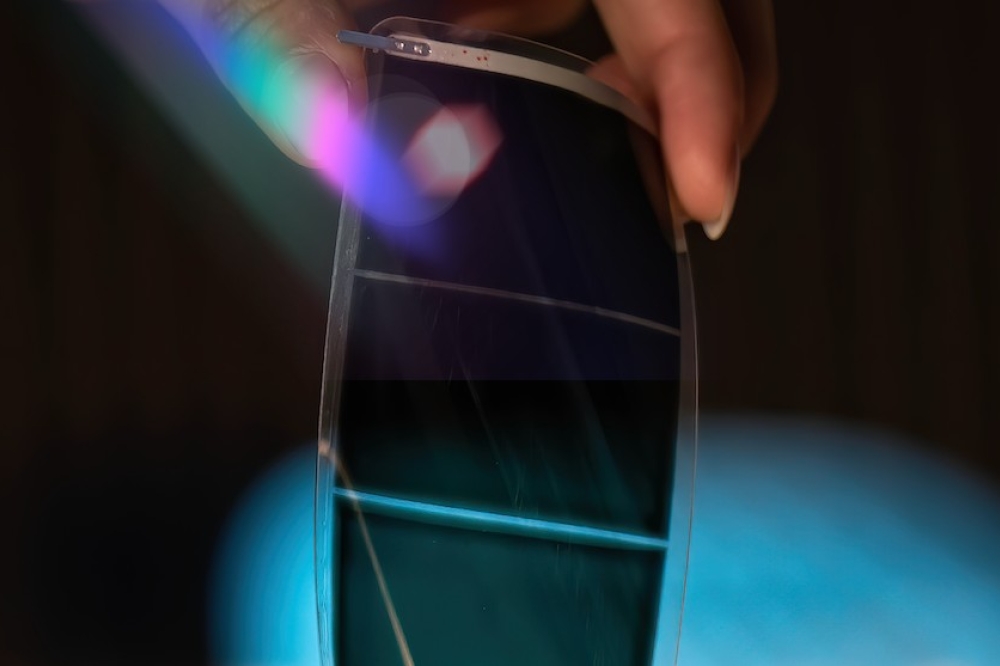
French energy-harvesting company Dracula Technologies is exploring the potential of developing OLED displays and flexible electronics by combining its expertise in additive manufacturing with cutting-edge organic materials.
Dracula's existing LAYER organic photovoltaic (OPV) technology (pictured above) harvests ambient light using organic materials. Now the company wants to extend these capabilities and is actively seeking partners to co-develop new technologies.
A key element is to eliminate Indium Tin Oxide (ITO) from OLED displays, paving the way for innovative applications in foldable displays, wearable devices, and medical sensors. The company aims to introduce a fully ITO-free printable electrode formulation as an alternative to conventional ITO electrodes.
Traditionally, ITO has been a big hurdle for scalability, environmental sustainability, and cost-efficiency. Dracula is developing an approach using organic materials to create conductive layers, compatible with flexible substrates such as polyethylene terephthalate (PET) and polyethylene naphthalate (PEN). The technology can be processed under ambient conditions without vacuum manufacturing steps.
CEO Brice Cruchon commented: "The potential is vast, and Dracula Technologies is excited about the opportunity to collaborate with like-minded companies to create the next generation of sustainable, flexible, and cost-efficient electronics. Our expertise in organic materials and sustainable manufacturing processes positions us at the forefront of this transformation, and we are eager to unlock new possibilities across multiple industries.”